
The right material for the job, explained straight
Every material we print, what it is good at, what it is not, and when a printed part may be a suitable alternative to machined metal after validation. Not sure? Tell us what the part has to survive and we will recommend one.
Pick by what the part has to do
Rough guide first, detail below. Prices are live in the quote tool, so you can switch material and watch the number change before you commit.
| Material | Choose it for | Service temp* | Outdoors | Price vs PLA | Availability |
|---|---|---|---|---|---|
| PLA | Crisp detail, prototypes, jigs, display parts | ~55°C | No | baseline | In stock |
| PETG | Tough everyday functional parts, brackets, clips | ~70°C | Sheltered | +20% | In stock |
| ABS | Classic engineering plastic, durable housings | ~90°C | No | +30% | Order-in |
| ASA | Outdoor and marine parts, UV stable | ~90°C | Yes | +40% | Order-in |
| PC | The strongest and most heat tolerant we run | ~110°C | OK | +90% | Order-in |
| TPU | Flexible: seals, grips, feet, dampers | ~60°C | OK | +75% | Order-in |
| Nylon (PA) | Gears, hinges and wear parts | ~100°C | OK | +110% | Order-in |
| PETG-CF | Stiff, matte functional parts after grade review | Grade-specific | Review | +60% | Order-in |
| PA-CF | Filled nylon for selected wear and functional parts | Grade-specific | Review | +350% | Order-in |
*Approximate guide only for the listed unfilled materials under light load. Exact behaviour varies by filament grade, geometry, print orientation and environment. Chopped-fibre grades are reviewed against the selected manufacturer's datasheet rather than assigned a generic temperature. Order-in materials add about one working day to dispatch. TPU has a £11.50 print-order minimum; ABS, ASA, PC, nylon and PETG-CF have a £46 minimum; PA-CF has a £69 minimum. These floors apply before any eligible no-colour-preference saving. The quote tool always shows the live price. See the carbon fibre page for selection guidance and limits.
What each one is actually like
Honest strengths and honest limits. Every plastic below is one we run on our own machines, and every photo is a part that came off them.
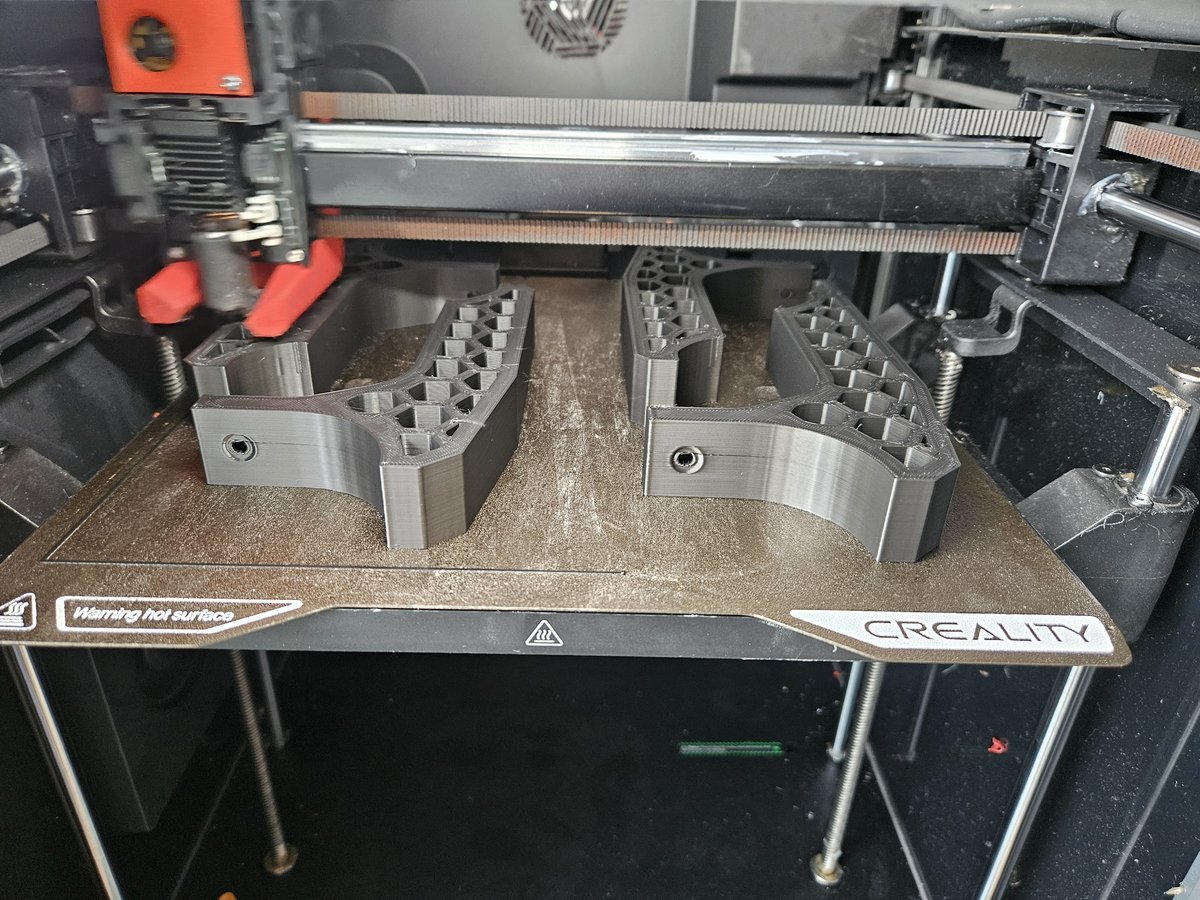 PLAcustomer brackets, our bench
PLA
The everyday workhorse and the detail champion. Matte and silk finishes available.
- Cleanest detail and sharpest edges of anything we print
- Stiffest of the everyday plastics
- Baseline price, always in stock
- Softens around 55°C, so hot cars and heaters are out
- Brittle under sharp impact
- Degrades outdoors in sunlight
PETG
Our default recommendation for parts that get used, not looked at.
- Tough with a little give, hard to crack
- Shrugs off water and most workshop chemicals
- Takes screws and threaded inserts well
- In stock, prints quickly
- Detail slightly softer than PLA
- Glossy surface shows scratches
ABS
What half the plastic around you is injection-moulded from, printed.
- Comfortable to about 90°C
- Machines, sands and glues well
- Vapour-smooths to a near-moulded finish
- Natural match when the original part was ABS
- UV slowly yellows and embrittles it, keep it indoors
- Order-in, engineering minimum applies
ASA
Everything ABS does, engineered to live outside.
- UV-stable and weatherproof by design
- Same ~90°C heat comfort as ABS
- The pick for marine, garden and vehicle exterior parts
- Costs a little more than ABS
- Order-in, engineering minimum applies
PC (polycarbonate)
Serious strength and heat tolerance without the carbon-fibre price.
- Strong, stiff and optically clear grades exist
- Comfortable to about 110°C
- Right for guards and brackets near motors and hot electronics
- Nearly double the PLA price, let the part earn it
- Overkill for most jobs, and we will say so
- Order-in, engineering minimum applies
TPU
Rubber-like parts printed to your exact geometry, not cut from sheet.
- Flexible: seals, gaskets, feet, grips, dampers
- Excellent abrasion resistance
- Shapes no die-cut sheet can match
- £11.50 print-order minimum, plus delivery
- Not for stiff structural parts
- Fine detail is limited
- Slow to print, order-in
Nylon (PA & PA-CF)
Nylon grades for selected wear parts; filled grades need exact duty and datasheet review.
- Tough and low-friction: gears, bushes, hinges
- PA-CF can add stiffness for a suitable, reviewed duty
- Best wear resistance of anything we run
- Absorbs moisture over months, dimensions can shift slightly
- Our priciest material
- Order-in, engineering minimum applies
Carbon fibre (PETG-CF & PA-CF)
Chopped carbon fibre can add stiffness and a matte surface. PETG-CF and PA-CF are families of grades, not one universal specification, so material selection starts with the exact duty and datasheet.
- PETG-CF: stiff, matte parts for selected duties
- PA-CF: filled nylon considered for wear and functional parts
- Printed with hardened steel nozzles, filament dried in-machine
- Properties vary by brand, grade, conditioning and orientation
- Dark colours only; PA-CF is black only
- Order-in, engineering minimum applies
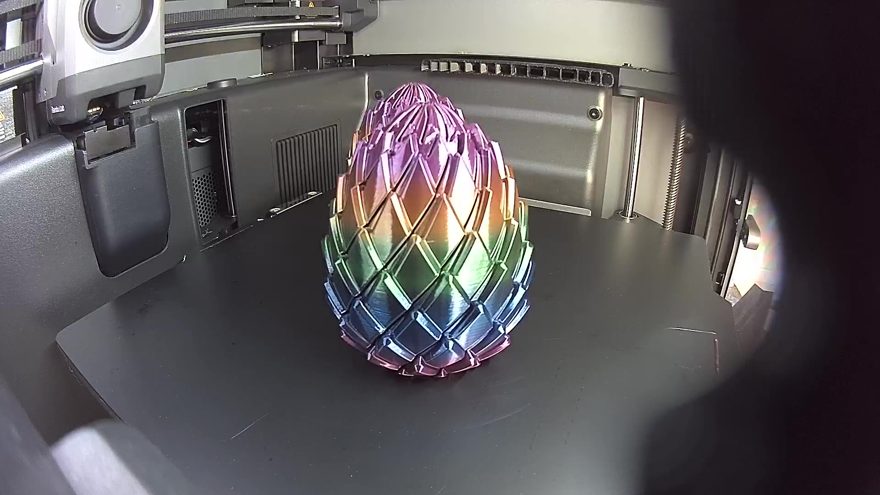 Finishessilk PLA, straight off the bed
Colours & finishes
Standard colours are picked in the quote tool. Matte and silk PLA, and multi-colour printing, are available where the part deserves it. Engineering materials run in a smaller colour range, ask if it matters.
Not sure? Describe the job, not the plastic
Tell us the load, the temperature, whether it lives outdoors and how long it has to last, and we will pick the material and explain why. And if FDM is honestly the wrong process for your part, we will say so rather than sell you the wrong thing. Send us the details and we will come back the same working day.
When a printed part replaces metal
A surprising amount of machined and fabricated metalwork is metal out of habit, not necessity. Here is where a printed part genuinely wins, and where metal keeps the job.
Where printed plastic wins
Weight: a printed bracket is typically five to eight times lighter than the same part in steel, and around half the weight of aluminium or less.
Corrosion: plastic never rusts and never sets up a galvanic reaction against stainless fixings, which matters on boats and anything outdoors.
Shape for free: a folded, welded, three-piece metal assembly can often become one printed part with the strength put exactly where it is needed.
Lead time and cost: days instead of weeks, no tooling, and the tenth reprint costs the same as the first. One-offs and short runs are a fraction of machining cost.
Where metal still wins
Sustained heavy load: plastic creeps under constant high stress, so highly loaded structural parts stay metal.
Heat: beyond roughly 100–150°C, depending on material, printed plastic is out of its depth.
Bolt torque: plastic threads strip under high clamping force. We design around it with brass inserts and load-spreading washers, but a torqued-down joint is metal's home ground.
Precision and wear: FDM holds about ±0.3 mm; machining does far better, and fast-sliding surfaces wear plastic sooner.
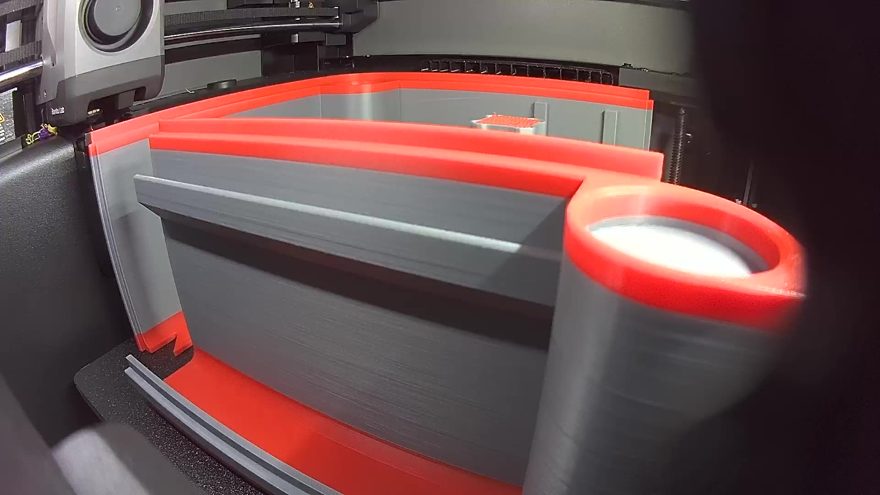
Straight off our bench: this two-colour air-con hose adapter replaced a discontinued OEM part, one of dozens we print for portable air conditioners. Appliance brackets, obsolete clips and housings, jigs, fixture plates and gauge bezels all follow the same pattern. If your part sits near the line, send the drawing and we will tell you honestly which side it falls on.
Materials, answered
Can a 3D printed part really replace a metal one?
Often, yes. Brackets, mounts, spacers, covers, knobs, jigs and low-to-moderate load parts translate well, usually into PETG, PC or PA-CF. What does not translate is sustained heavy load, high heat or high bolt torque. Send us the part and we will give you a straight answer either way.
Which material should I pick for outdoor use?
ASA. It is UV-stable and weatherproof, which is exactly what it was developed for. PETG copes with sheltered outdoor spots. PLA and ABS both degrade in sunlight, so we do not recommend them outside.
How hot can a printed part run?
As a working guide under light load: PLA to about 55°C, PETG to about 70°C, ABS and ASA to about 90°C, and PC to about 110°C. Under sustained load those numbers come down, so tell us the real operating conditions and we will pick with margin.
Why do engineering materials cost more?
Material and machine-time rates vary by filament. TPU has a £11.50 print-order minimum; ABS, ASA, PC, nylon and PETG-CF have a £46 minimum; PA-CF has a £69 minimum. Stocked colours use normal dispatch times; colours marked Order in add about one working day. Delivery is shown in the quote.
Do I need to choose a material before getting a price?
No. Upload your STL, STEP or 3MF to the instant quote tool, then switch materials and watch the price update live. Nothing is committed until you order.
Will support marks show on my 3D print?
Parts with overhangs, or parts too large to print in their best orientation, need support material. We remove the supports, but they leave rougher marks where they touched the part, on every material. Filled materials like PETG-CF and PA-CF show this most. Your part arrives as printed: sanding, filing and other finishing are not included unless your quote says so. Where the finish matters, tell us in your order notes and we’ll let you know before printing if supports will affect a visible or sealing surface.
Tell us what the part has to survive
Upload a file for a live price in any material, or describe the job and we will recommend the right one, honestly, the same working day.