
Leaking capacitors, replaced before they eat the board
Every electrolytic capacitor from the 90s and 2000s is now living on borrowed time, and when they leak, the electrolyte corrodes traces and kills otherwise-good hardware. We recap consoles, vintage computers, monitors and vehicle ECUs with quality Japanese capacitors, clean up the damage, and post them back working.
Recap pricing
Book with a £15 deposit, pay the balance when the work is done. Severe pre-existing damage is photographed and quoted before any extra work.
From our repair customers
Read the full customer reviews →“Excellent communication throughout and a fast turnaround time. Highly recommended.”
Andrew Wade · Google · September 2026
“super professional and kept me informed”
Review excerpt · Google · September 2026
From the repair bench: See the Roland JP-8000 PCB repair and confirmed outcome.
How dying capacitors announce themselves
If any of these sound familiar, the caps are the first suspect on anything made before about 2008.
Won’t power on
Dead, or clicks and gives up. Dried-out caps in the power supply section can’t smooth the rails any more, so the board never gets stable power.
Random resets & crashes
Runs for a while then resets, especially under load. Classic marginal-capacitor behaviour: the rails sag the moment the board asks for current.
No picture, no sound
Garbled video, missing colours, hum or silence on audio. The signal-path caps have drifted miles from their rated value.
Works once it’s warm
Needs several attempts to start, then behaves. Capacitance recovering as the caps heat up is a textbook end-of-life symptom.
Visible bulge or leak
Domed tops, split vents, crusty residue or a fishy smell. The cap has already failed, and its electrolyte is now eating the board around it.
Settings & clock lost
Forgets the time or its settings the moment it’s unplugged. On the Original Xbox this one comes with a nasty twist (see below).
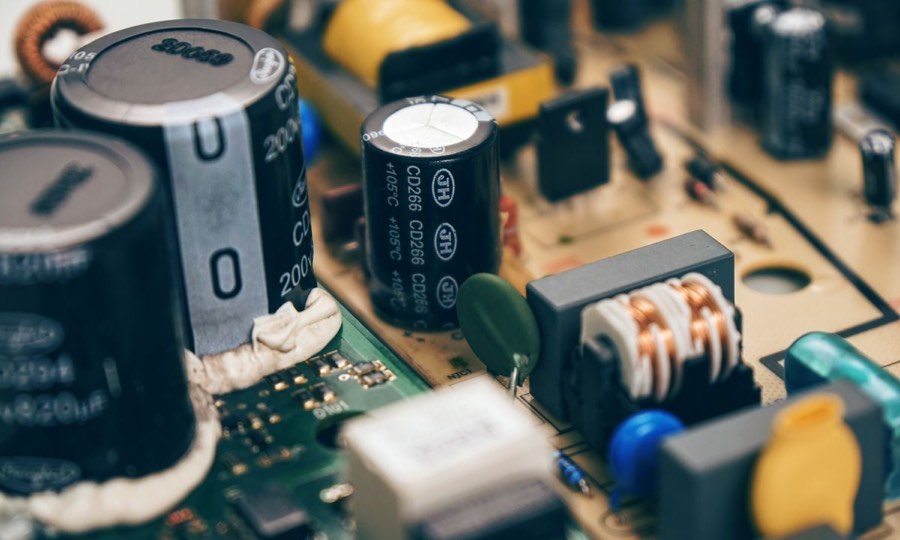
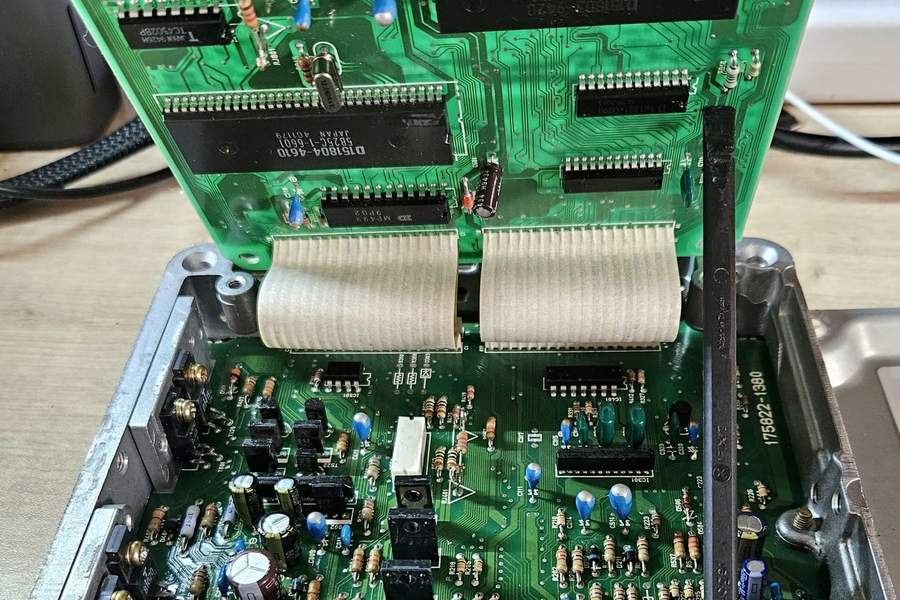
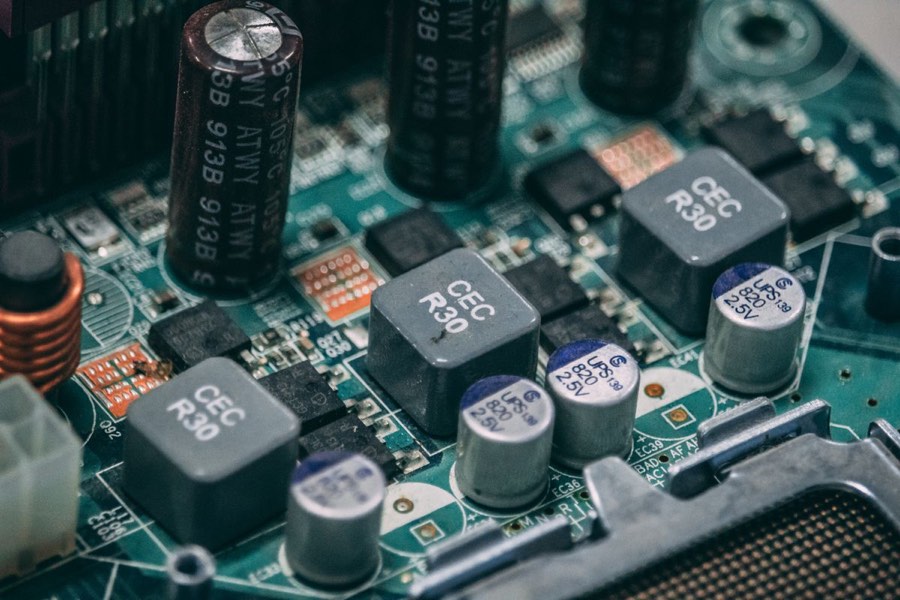
The Original Xbox clock capacitor
If you own a v1.0–1.5 Xbox and haven’t had this out yet, it’s quietly leaking onto the motherboard right now, even unplugged.
Remove it before it kills the console
Every original Xbox up to v1.5 shipped with a clock capacitor that is now famous for leaking corrosive electrolyte across the traces beneath it. It doesn’t need the console to be on, or even plugged in, it just slowly eats the board in storage. Consoles die every week from a part whose only job was keeping the clock for a few hours.
The fix is simple and permanent: the console runs perfectly without it. We remove it, neutralise and clean the area, inspect the surrounding traces under magnification and repair any minor damage, all inside the £55 test & replace price. While it’s open, we’ll tell you honestly whether the rest of the board would benefit from a full recap.
Want it properly future-proofed in one visit? The £65 Original Xbox bundle adds a recap of the power supply electrolytics, the other caps on these consoles that fail with age, plus a full boot and function test before it comes home.
- Clock cap removed, no replacement needed
- Electrolyte neutralised & board cleaned
- Traces inspected under magnification, minor repairs included
- Board photographed before & after
Three jobs, three flat prices
Book with a £15 deposit. You post it to us, tracked return postage is in the price. Balance on completion, before return post.
Test & replace
Every cap on the board tested, the failed ones changed. An Xbox clock cap, one known-bad cap, or a board you simply don’t trust yet.
£55
- Every electrolytic tested for capacitance & ESR
- Any that have failed or drifted replaced
- Leaked electrolyte neutralised & cleaned
- Surrounding traces inspected & minor repairs
Full-board recap
Consoles, vintage computers, monitors, PSU and amp boards where several caps have already gone, so the rest are next.
£79
- Every electrolytic cap replaced, not just the bad ones
- Rubycon, Panasonic or Nichicon parts
- Leak cleanup & minor track repair included
- Tested against the original fault where feasible
Vehicle ECU recap
90s engine ECUs (Toyota, Denso and friends) where good used replacements are getting scarce.
£95
- Every electrolytic replaced with 105°C-rated parts
- Leak cleanup & track repair around the caps
- Every joint checked under magnification
- Trade & batch pricing available, just ask
Not sure which one you need? Send photos, photo quotes are free and we’ll point you at the right option. If the board has an unknown fault beyond the caps, our £40 redeemable assessment is the better route: full bench diagnosis, with the £40 coming off whatever the repair turns out to be.
If it’s got electrolytics, it qualifies
The same bench, microscope and hot air as our board-repair service, pointed at the caps.
Retro consoles
Original Xbox, Game Gear (screen and sound boards are notorious), Mega Drive, PC Engine, PS1-era, and their power supplies, which are often worse than the consoles. Handheld owner? See the dedicated Game Gear & Game Boy recap service.
Vintage computers
Amiga, Atari ST, classic Macs and 90s PCs. Surface-mount electrolytics on these leak invisibly under the can, if it’s never been recapped, it needs it. Dedicated pages: Amiga recap and Spectrum & C64 recap.
2000s PCs & monitors
The “capacitor plague” era: motherboards and LCD monitor power boards built 2002–2007 with bad electrolyte. Domed caps on these are a when, not an if.
Vehicle ECUs
90s engine ECUs where the caps leak onto the driver stages. Good used units are drying up, so recapping the one you have is increasingly the sensible move.
Power supplies & PSU boards
Console PSUs, monitor supplies, bench gear. Caps in supplies work hardest and die first, and a failing supply can take the device with it.
Something else?
Amps, synths, arcade boards, test gear, if it has electrolytic capacitors and isn’t a phone or tablet, ask us. Photo quotes are free.
What a proper recap includes
A recap done badly is worse than no recap. This is what the price buys.
| All electrolytics | On a full recap every electrolytic goes, caps from the same batch fail together. On test & replace we meter every one and change what has failed, because judging by eye alone is the false economy |
| Japanese parts | Rubycon, Panasonic or Nichicon, matched to or exceeding the original spec, 105°C and low-ESR where the circuit calls for it |
| Leak cleanup | Leaked electrolyte neutralised and cleaned off, not soldered over, residue left behind keeps corroding under the new part |
| Track & pad repair | Minor corrosion damage repaired with jumper wire under magnification, included in the price |
| Inspection | Every joint checked under the microscope before the board is buttoned up; before & after photos on request |
| Testing | Tested against the original fault where the device can be run on the bench; ECUs get power-rail and continuity checks (see FAQ) |
Boards leave the bench cleaned of flux residue, with the old capacitors bagged and returned so you can see what came out.
From your shelf to ours and back
Book online
£15 deposit secures your slot. We email the postal address straight away.
Post it in
Board or whole device, well padded, sent tracked. Checked under magnification on arrival, and severe damage is photographed and quoted before any extra work.
Recap & cleanup
Caps replaced, electrolyte neutralised, tracks repaired, every joint checked under the microscope.
Back to you
Balance settled, posted back tracked. Old caps in the box, 90-day warranty on the work.
More than the caps?
Board & component soldering
Unknown fault, broken connector or damage beyond the caps? Our board-level repair service covers SMD work, micro-soldering and BGA, with a £40 redeemable assessment.
Laptop & MacBook service
Hot, loud or slow laptop? The £65 fixed-price service covers a full strip-down clean, fresh thermal paste, battery report and tune-up.
3D-printed replacement parts
Cracked shell, missing bracket or a broken clip on the same device? We reprint discontinued plastic parts in engineering materials.
Common questions
How much does capacitor replacement cost in the UK?
Test & replace, where every electrolytic on the board is metered and the failed ones are changed, is £55. That also covers a single known-bad capacitor such as the Original Xbox clock capacitor. A full-board recap of a console, monitor or PC board is £79. A vehicle ECU recap is £95. All prices include quality Japanese capacitors, cleanup of any leaked electrolyte and minor track repair. You book with a £15 deposit and pay the balance when the work is done.
Do you replace all the capacitors or just the leaking ones?
That depends which service you book. On test and replace we meter every electrolytic on the board for capacitance and ESR and change the ones that have failed or drifted out of spec, which is far more reliable than judging by eye, since plenty of dead capacitors look perfect. On a full recap we replace every electrolytic regardless, because capacitors from the same era and production batch fail together, so once a board has several failures the rest are not far behind. New parts are Rubycon, Panasonic or Nichicon, matched to or exceeding the original specification.
Should the Original Xbox clock capacitor be removed or replaced?
Removed, in almost every case. On v1.0–1.5 boards the clock capacitor leaks corrosive electrolyte onto nearby traces even when the console is unplugged, and the console runs perfectly without it, the only thing you lose is the clock keeping time for a few hours when the power is off. We remove it, neutralise and clean the area, inspect the nearby traces under magnification and repair any minor damage, all within the £55 test & replace price.
Can you fix a board the leak has already damaged?
Usually, yes. Leaked electrolyte eats solder joints, pads and traces, so we clean and neutralise the area, then repair damaged tracks with jumper wire under magnification. Minor track repair is included in every recap price. If a board arrives with severe damage that needs major rebuild work, we photograph it and send you a quote before doing anything chargeable.
Do you test vehicle ECUs after recapping?
We test what can be tested on the bench: power rails, continuity around the repair area and the quality of every new joint under magnification. We can’t run a vehicle ECU as if it were in the car, so ECU recaps carry a workmanship warranty covering the parts we fitted and the joints we made, rather than a guarantee the ECU cures a specific running fault.
How long does a recap take?
Typical turnaround is 5–7 working days from arrival to return dispatch. Single-capacitor jobs like the Xbox clock cap are usually on their way back within 5–7 working days. If leak damage needs extra track work we tell you when we quote for it.
Is there a warranty?
90 days on the workmanship. If a cap we fitted or a joint we made fails in normal use, we put it right free.
How should I pack a board for posting?
Whole devices can be posted as they are, well padded. Bare boards should go in an anti-static bag if you have one (a clean plastic bag is a reasonable substitute), wrapped in bubble wrap, in a box with padding on all sides. We email you the postal address as soon as you book, so all you need is a box and a tracked postage service.
Ready to send one in?
Flat prices, quality Japanese capacitors, leak cleanup included and a 90-day warranty. Serving the whole UK by post from Basingstoke.
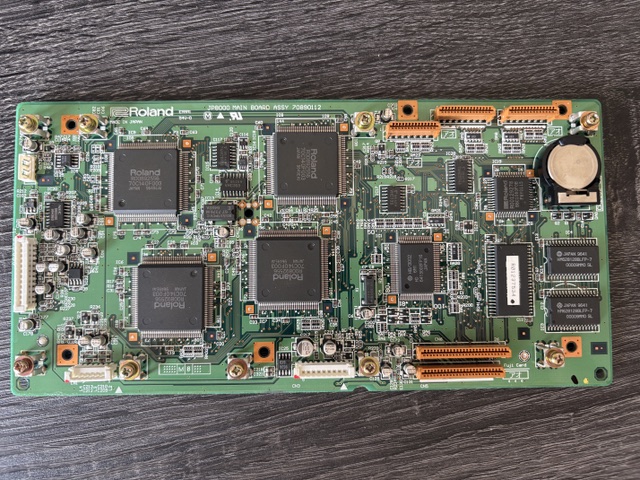
Roland JP-8000: normal output restored
Capacitor replacement, board cleaning and a new backup battery. After refitting, the owner confirmed normal output levels and restored memory.
Read the JP-8000 repair case study →