


Magellan GPS Tracker with no power: battery contacts rebuilt, then a warranty fix
At a glance
- Device: Magellan GPS Tracker, a handheld GPS that runs on two batteries
- Fault: wouldn't turn on, even with new batteries
- First fix: the positive contacts in the battery slots were missing, so we rebuilt them. The internal backup battery was dead, and with the owner's go-ahead we fitted a new one.
- Came back: a few days later it was completely dead again on brand new batteries
- Real cause the second time: the negative terminals had been compressed, so the batteries were making very little contact
- Fix: reshaped the negative terminals. It now powers on reliably, even when shaken and tapped.
- Cost to the owner: £85 in total (£40 assessment, then £45 including £15 for the backup battery). The warranty visit cost nothing, and we covered the postage both ways.
The fault
The owner had fitted new batteries but the tracker still wouldn't turn on. With batteries that are known to be good, the next place to look is the path the power takes from them into the unit.
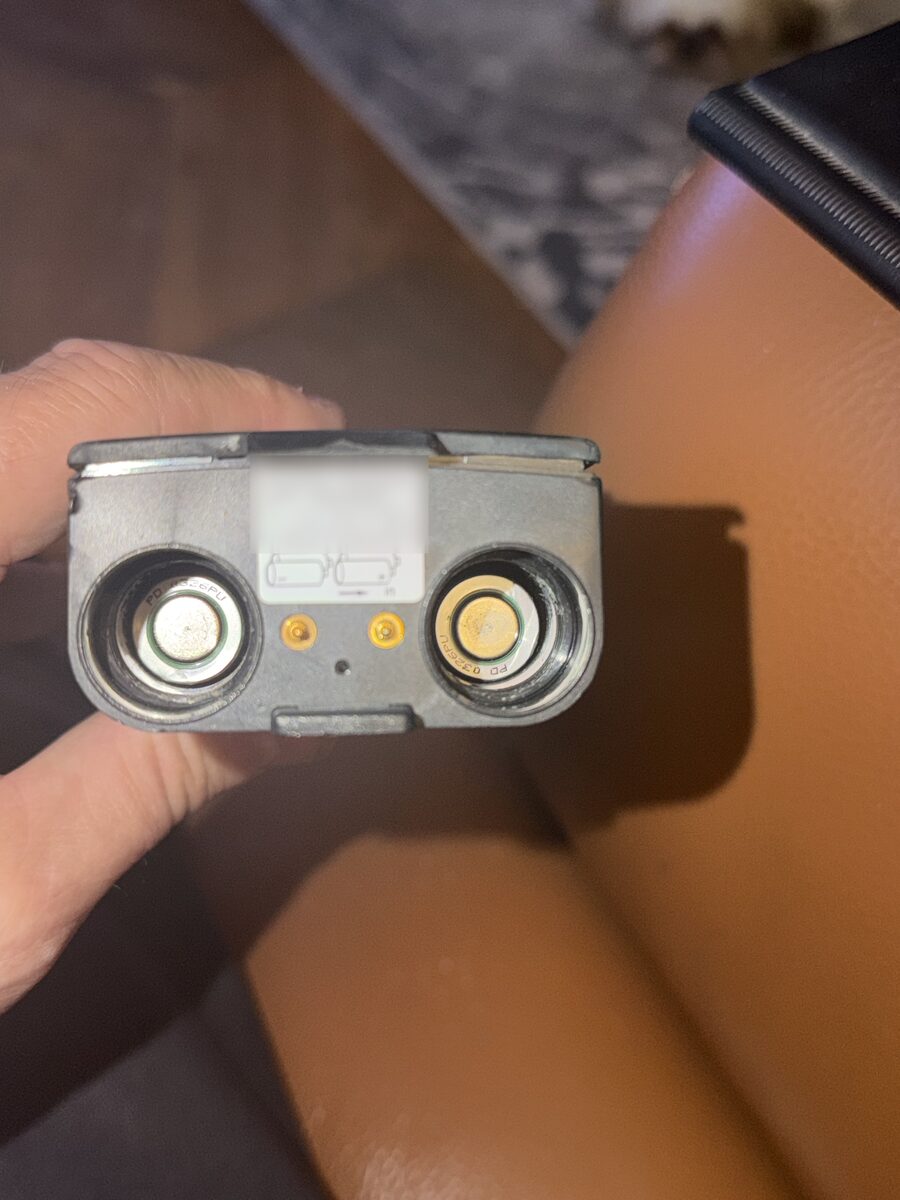
The owner's photo of the battery end before it was posted to us.
What we found the first time
The positive contacts in the battery slots were missing, so the power had no way to reach the board. There was no access to repair them from inside, so we rebuilt the contacts so power could get through properly.
With power restored, the tracker started but had lost its memory. Its internal backup battery, which keeps the time and settings while the main batteries are changed, was dead. We explained that to the owner, and with their go-ahead fitted a new one.
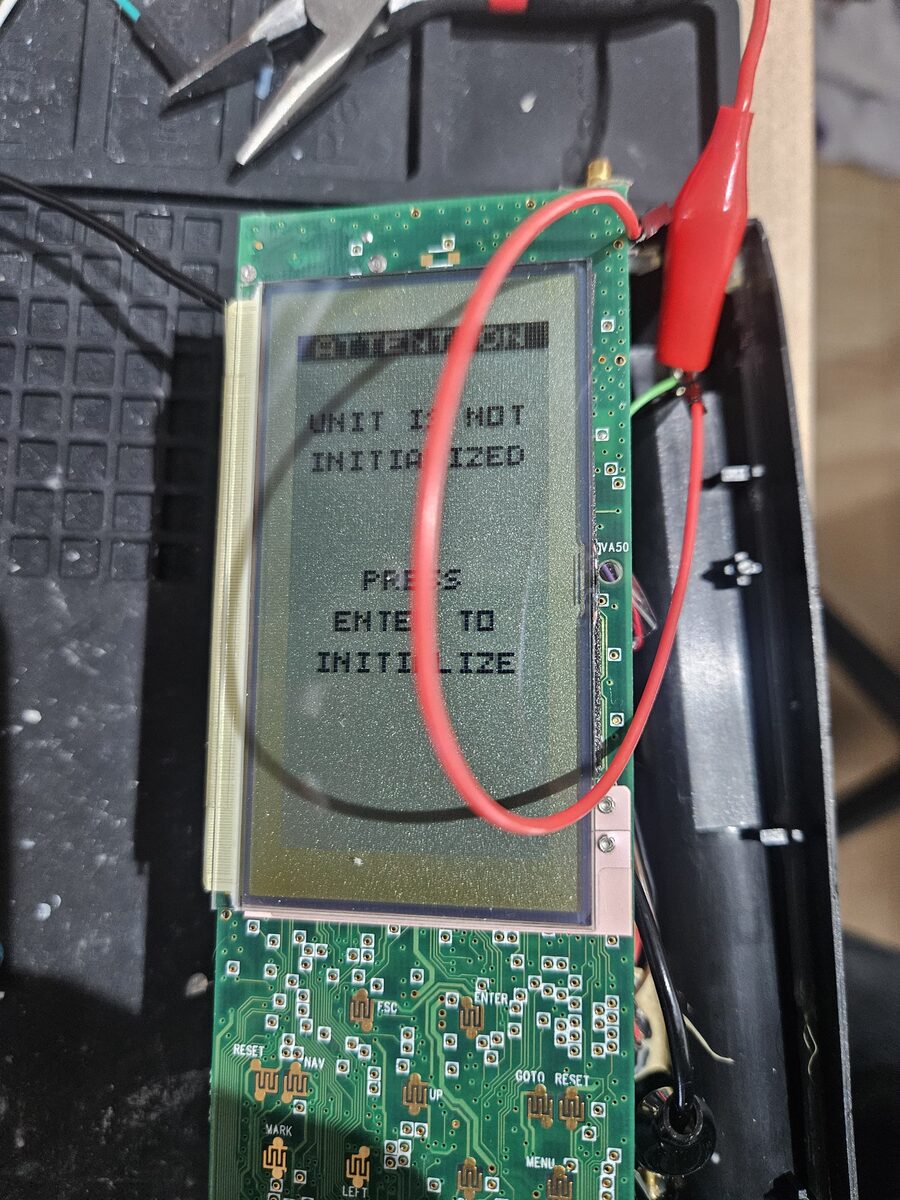
On the bench with power restored, asking to be initialised.
Out in the garden it picked up satellites and set its own date from the signal. It didn't get a full position fix at our workshop, where the view of the sky is poor, and we told the owner that before it went back.
When it came back
A few days after it got home, the owner sent us a video of the tracker completely dead on brand new batteries. That's what a warranty is for, so we paid for it to come straight back.
On the bench the rebuilt positive contacts were fine. The problem was at the other end. The negative terminals had been compressed, so the batteries were barely touching them. A connection like that can work when you test it and then fail as soon as the unit is moved or the cover goes back on.
We reshaped the negative terminals to give the batteries a firm contact. The tracker now powers on reliably, including after being shaken and tapped, which is exactly what would have shown up a weak contact.
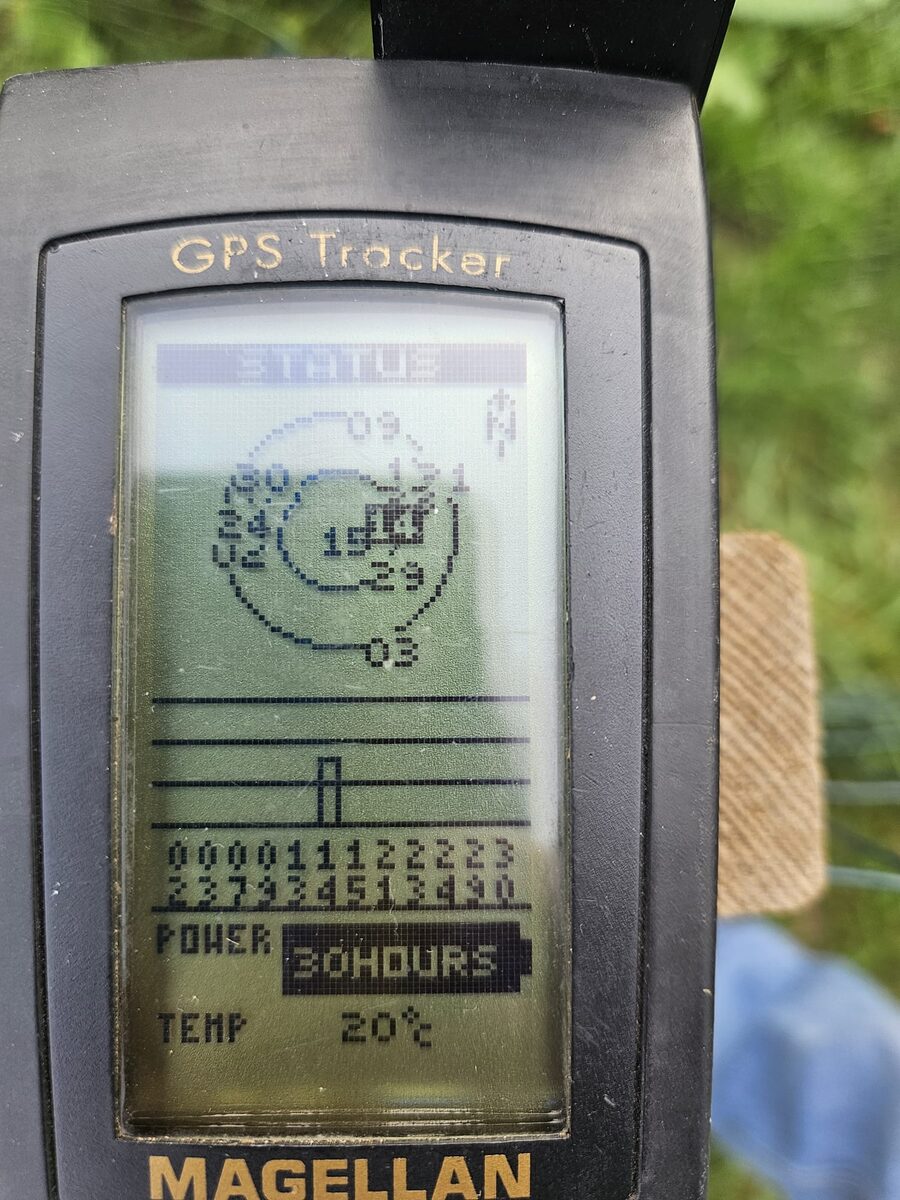
Outdoors after the warranty repair: satellites on the sky plot, signal bars and around 30 hours of battery showing.
A tip if you have one
When you change the batteries, screw the cover down firmly and give the unit a gentle wiggle. If you can hear the batteries moving, the cover isn't tight enough and they may not be making good contact.
Questions about this fault
Why won't my GPS turn on with new batteries? If the batteries are good, the fault is usually in the contacts or in the path from the batteries to the board. Missing, corroded or compressed contacts are common on older handheld units.
What is a backup battery and do I need it? Many older devices have a small internal cell that keeps the time and settings while the main batteries are out. If it's dead, the unit loses its memory every time you change batteries.
What happens if a repair fails after it comes back? Tell us. On this one we covered the postage both ways, found the real cause and fixed it at no cost.
Got an older gadget that won't power on?
Our board-level repair assessment is £40. We find out what has failed and give you a written price before any further work, and tracked return postage is included.